
by Lynne Eldridge MD. Originally posted on 30 October 2015 at About.com. Many of us have been upset recently as well-meaning organizations have made smoking cessation the focus of lung cancer awareness month. Certainly, encouraging the public to never begin, and to quit if they smoke, is admirable. And for people with lung cancer, quitting may improve survival. Yet lung cancer awareness month should have a different focus. Spreading information on smoking cessation does little overall for those living with lung cancer today. Five months after receiving a diagnosis of lung cancer, only 14% of people with the disease are smokers. To focus on smoking is analogous to making breast cancer awareness month all about informing women that they should have their first child before the age of 30 (to decrease the risk of breast cancer.) Awareness month should be about supporting people with the disease, not about discussing the causes. Awareness month should also be about funding to research better treatments. Those who smoked in the past won't benefit from a lecture about what they may have done differently 20 years ago. Instead, they need treatment today. And for never smokers with the disease--not uncommon considering lung cancer in never smokers is the 6th leading cause of cancer deaths in the U.S.--this focus makes a month designed to celebrate their lives irrelevant. Some people may remain skeptical, but read on for further reasons why lung cancer awareness month should not have smoking cessation as the central focus. The majority of people with lung cancer are non-smokers. This heading is not a typo. The majority—roughly 60% of people—diagnosed with lung cancer are non-smokers. This includes people who smoked at some time in the past, as well as never smokers. In the United States 20% of women with lung cancer are never smokers, with that number rising to 50% of women with lung cancer worldwide. Numbers such as 20% may seem small, until you take a look at the statistics. Lung cancer is the leading cause of cancer deaths in both men and women in the United States. Lung cancer kills twice as many women as breast cancer, and 3 times as many men as prostate cancer. And while around 30 to 40% of people smoke at the time of diagnosis, only 14% of people with lung cancer are smoking 5 months after diagnosis. In other words, the vast majority of people with lung cancer today will not benefit from hearing about the hazards of smoking. Not only is this focus not helpful, but it serves to propagate the stigma of lung cancer as a smoker's disease. Unfortunately this vast majority, including most never smokers, have already been subjected to the blame game. Have breast cancer? Nice. People act loving and ask how they can help you. Have lung cancer? Raised eyebrows accompanied by some variation of the question,"How long did you smoke?" There are many reasons that living with lung cancer can be harder than living with breast cancer. Let's not add cancer awareness month to the list. There are Other Causes of Lung Cancer There are many causes of lung cancer. Even if tobacco had never been introduced on the planet, we would still have lung cancer. Yes, smoking is the leading cause of lung cancer, but causes other than smoking are very important. Though the number seems small—20% of women who develop lung cancer being never smokers—this translates to a fifth of the 71,660 lung cancer deaths in women expected for 2015. Radon exposure in the home is the second leading cause of lung cancer, and the number one cause of lung cancer in non-smokers. Roughly 21,000 people die from radon-induced lung cancer each year, and this cause is entirely preventable. Picking up a radon test kit from the hardware store for around 10 bucks, and having radon mitigation done if the test is abnormal, is all that's needed. Putting these numbers in perspective may help. Around 39,000 women are expected to die from breast cancer in 2015. If we had a $10 test to check for a risk factor, and a procedure costing less than a grand that could completely prevent half of breast cancer deaths, do you think we would have heard? Why doesn't the public know about this? It goes back to the focus of this article; we are placing the emphasis of lung cancer awareness on smoking, and in doing so, are leaving the public with a false sense of assurance that all's well if you don't smoke. There are other causes worth mentioning, from air pollution, to indoor air pollution, to secondhand smoke, to occupational hazards. Don't assume you are safe if you never smoked. Learn about the other causes of lung cancer in non-smokers and what you can do to reduce your risk. People Who Have Quit Smoking Are Still at Risk Quitting smoking certainly reduces the risk of lung cancer, but for most, some risk always remains. The numbers in the last slide attest to this. There are more former smokers who develop lung cancer each year than current smokers. If you smoked in the past, don't fret yet. After 10 years of quitting, the risk of lung cancer decreases by 30 to 50%. There are also some ways of reducing your risk of dying from lung cancer. One method is low dose CT lung cancer screening. While screening doesn't lower the chance that you will get lung cancer, it does increase the chance that if you develop lung cancer, it will be found in the earlier, more curable stages of the disease. It's thought that screening people at risk could reduce the mortality rate from lung cancer by 20% in the United States. Screening is currently recommended for people between the ages of 55 and 80, who have a 30 pack-year history of smoking, and continue to smoke or quit within the past 15 years. In some cases screening may be recommended for other people based on personal risk factors for lung cancer. In addition, studies looking at exercise and lung cancer as well as diet and lung cancer suggest there are some things that both people without and people with lung cancer can do to lessen risks. The Stigma Interferes With Early Diagnosis My favorite part of lung cancer events I attend, is when lung cancer survivors share their story. A special time, but oh so painful. Time and time again people share what eventually led to their diagnosis -- often a series of visits, with several doctors, over a period of months, during which time they have been diagnosed with everything from asthma to Lyme disease. Lung cancer flies below the radar screen for many health care professionals, especially lung cancer in never smokers and lung cancer in young adults. For this reason, many are diagnosed when lung cancer has already spread, and the chance of a cure with surgery has passed. In fact, young adults and never smokers are more likely to be diagnosed at an advanced stage of the disease. Until we have a widespread screening tool for lung cancer, it's important for health professionals and patients alike, to realize that all you need to get lung cancer is lungs. The symptoms of lung cancer can be different in non-smokers than smokers, and those of lung cancer in women are often different than symptoms in men. Be your own advocate. If you have any symptoms that aren't adequately explained, ask for a better explanation or a second opinion. If we are to find lung cancer early, we need to dispel the myth that lung cancer is a smoker's disease. That's part of what lung cancer awareness month is all about. The Stigma Interferes With Research for New Treatments Private funding for breast cancer surpasses that of lung cancer by a great distance, as evidenced by Susan G. Komen being a household word and pink ribbons having a widely recognized significance. How many people can name the largest non-profits for lung cancer, and how many people even know the color of the lung cancer ribbon? Public funding also lags far behind for lung cancer, and this is important because funding means dollars which in turn means research. In 2012, federal research spending added up to $26,398 per life lost to breast cancer, vs only $1,442 per life lost from lung cancer. I have often wondered what the survival rate for lung cancer would be if the same amount of money and research had been invested as has been with breast cancer. Why is the funding so low, and why are researchers less likely to devote themselves to lung cancer? The stigma. There is an unseen, unheard statement that says, "These people smoked so they deserve to have cancer." Nobody deserves to have lung cancer, whether a never smoker or a lifelong smoker. Making smoking cessation the focus of lung cancer awareness only increases this stigma and gap. The Stigma Interferes With Research About Causes I made a comparison earlier about deaths from breast cancer, vs that from radon-induced lung cancer. That can be taken a step further. I read studies galore looking at possible causes of breast cancer, as well as dietary and other measures which may reduce the risk. It's rare when I find similar studies looking at lung cancer. What is causing lung cancer in non-smokers? Why is lung cancer increasing in young, never smoking women? We need to change the face of lung cancer, so that we can begin to look at possible answers to these questions. Lung Cancer is Increasing in Young, Never-Smoking Women Most of us have read the headlines in recent years. Lung cancer in men is now decreasing in the United States, while that in women has leveled off. Yet there is one group for whom lung cancer is steadily increasing. Young, never-smoking women. These women have to put up with constant questions about their smoking status, or another variant, "Did your parents smoke when you were growing up?" Why can't we treat these women as we treat women with breast cancer in October? Lung cancer isn't a "smoker's disease." Someone with lung cancer could be your mother or your daughter or your sister or your aunt. These young women deserve to know that they aren't being dismissed for having a smoker's disease, while at the same time coping with the stigma. Focus of Lung Cancer Awareness Month Okay. So smoking cessation shouldn't be the focus of lung cancer awareness month. What should be at the center of awareness? Number one should be support. Every single person with lung cancer -- regardless of smoking history -- deserves our love, compassion, and the best care possible. Think of how women are treated during breast cancer awareness month, how they are celebrated, how they are reminded that research is being done to make a difference. If you just don't know what to say, check out these tips on things not to say to someone with lung cancer. How would you treat your friend or loved one with lung cancer differently, if she had breast cancer instead? Number two should be about awareness. Not smoking cessation as this is done everywhere year round. Instead awareness that lung cancer occurs in non-smokers and having knowledge of the early symptoms could make a difference. Those who are former smokers should have the opportunity to learn about screening options. And just as breast cancer awareness month raises funds for research, lung cancer awareness month should also be a time to educate and encourage those with lung cancer about new advances, while providing funding for further advances. A Word About Smoking and Lung Cancer For smokers with lung cancer, quitting is critical. To speak of separating lung cancer awareness month from smoking is not to dismiss smoking as a cause of lung cancer. It is. For the minority of people living with lung cancer who smoke, quitting is incredibly important, and likely the most important thing anyone can do to improve survival. Check out these 10 reasons to quit smoking after a diagnosis of cancer. Quitting smoking after a diagnosis of lung cancer improves the response to cancer treatments, improves quality of life, and improves survival. For those without lung cancer, quitting not only reduces lung cancer risk, but improves survival in other ways. In addition to lung cancer, there are many cancers that are associated with smoking, and many other medical conditions associated with smoking. The Quit Smoking Toolbox is a free resource to help you gather the tools you need to be successful in giving up the habit. But remember that these tips on smoking and cancer were placed at the end for a reason. They apply to only a minority of people living with lung cancer today. Sources:
Amato, D. et al. Tobacco Cessation May Improve Lung Cancer Patient Survival. Journal of Thoracic Oncology. 2015. 10(7):1014-9. American Cancer Society. Cancer Facts & Figures 2015. Accessed 06/08/15. http://www.cancer.org/acs/groups/content/@editorial/documents/document/acspc-044552.pdf American Society of Clinical Oncology. Cancer.net Tobacco Use During Cancer Treatment. 04/2012. http://www.cancer.net/navigating-cancer-care/prevention-and-healthy-living/tobacco-use/tobacco-use-during-cancer-treatment Amato, D. et al. Tobacco Cessation May Improve Lung Cancer Patient Survival. Journal of Thoracic Oncology. 2015. 10(7):1014-9. Howlader, N., Noone, A., Krapcho, M., Garshell, J., Miller, D., Altekruse, S., Kosary, C., Yu, M., Ruhl, J., Tatalovich, Z., Mariotto, A., Lewis, D., Chen, H., Feuer, E., and A. Cronin (eds). SEER Cancer Statistics Review, 1975-2012, National Cancer Institute. Bethesda, MD, based on November 2014 SEER data submission, posted to the SEER web site, April 2015. http://seer.cancer.gov/csr/1975_2012/ National Cancer Institute. Cancer Statistics. Accessed 06/08/15. http://www.cancer.gov/about-cancer/what-is-cancer/statistics National Cancer Institute. Lung Cancer Prevention (PDQ). Updated 05/12/15. http://www.cancer.gov/types/lung/patient/lung-prevention-pdq#section/_12 National Cancer Institute. Smoking in Cancer Care—for Health Care Professionals. Accessed 08/01/15. http://www.cancer.gov/about-cancer/causes-prevention/risk/tobacco/smoking-cessation-hp-pdq#section/_1 Parsons, A. et al. Influence of smoking cessation after diagnosis of early-stage lung cancer on prognosis: systematic review of observational studies with meta-analysis. British Medical Journal BMJ2010:340:b5569. Published online 21 January 2010.
1 Comment
by Dr. Patricia Thompson Originally published on 23 August 2014 by the Bonnie J. Addario Lung Cancer Foundation Such distress is understandable. The disease continues to be the leading cause of cancer death for both men and women in the U.S. More people die of lung cancer each year than the next three most common types of cancer – breast, colon and pancreatic – combined. According to the American Cancer Society (ACA), lung cancer is expected to claim the lives of nearly 160,000 Americans in 2014, accounting for 27 percent of all U.S. cancer deaths. Another reason lung cancer is feared is that long-term survival rates are very low. Although five-year survival is more than 53 percent for cases detected when the disease is still localized (within the lungs), it drops to less than 4 percent when diagnosed after tumors have spread to other organs. Unfortunately, because lung cancer can be difficult to detect, only 15 percent of cases are diagnosed at an early stage. Although lung cancer rates are falling overall, the rate has been increasing among two groups in particular: women and non-smokers. In fact, according to the National Cancer Institute, over the past 36 years the rate of new lung cancer cases among men has dropped by nearly a quarter, while the rate among women has risen 100 percent. The U.S. Centers for Disease Control and Prevention reports that more women die of lung cancer than breast, uterine and ovarian cancers combined. Another notable trend is the increase in lung cancer among healthy non-smokers. The ACA reports that between 16,000 and 24,000 Americans who have never smoked die from lung cancer every year. If lung cancer in non-smokers were its own category, it would rank among the top 10 fatal cancers in the U.S. For reasons doctors don’t fully understand, most lung cancer cases among non-smokers occur in women. The rise in lung cancer among non-smokers is one reason stigmatizing the disease is increasingly seen as inappropriate. While it’s true the majority of cases continue to be diagnosed among smokers or former smokers, lung cancer can also result from factors over which individuals have little control: genetic mutations, as well as exposure to radon gas, secondhand smoke, air pollution and asbestos, among others. Much more important is to continue improving our methods of detection and treatment. Great progress is being made in both. For example, while chest X-rays are generally the first diagnostic imaging a patient might undergo when lung cancer is suspected, low-dose computed tomography (CT) scans are proving more effective at finding lung tumors earlier, when they are easier to treat. The value of CT scans in early lung cancer detection is making such screening more common. Some medical organizations are now recommending routine lung screening for high-risk patients – defined as individuals 55 to 74 years old with at least a 30-year smoking history, and who currently smoke or quit within the past 15 years. These are also the patients that derive the most benefit from screening. For patients diagnosed with lung cancer, advances in treatment options are offering more hope. In addition to new surgical techniques which no longer require full open-lung surgery, technological advances are making radiation therapy more precise than ever – targeting lung tumors and sparing healthy tissue. With brachytherapy, thin catheters carry radioactive ‘seeds’ to lung tumors to deliver high doses of radiation up close. Chemotherapy is advancing too, with new drugs and medical technologies that can help increase lung cancer survival. One exciting development is immunotherapy, which uses antibodies and man-made proteins to bolster the immune system and train it to attack cancer cells. Ongoing research on human genes is also helping scientists develop therapies specifically targeting the genetic mutations that drive tumor growth. What’s most important to remember about lung cancer is it’s largely preventable, but everyone has some risk. Given recent trends, women should be aware of the signs of lung cancer – a lingering or worsening cough, shortness of breath, chest pain, unexplained weight loss, hoarseness, among others – and not hesitate to seek medical care if concerned. Let’s raise awareness of this terrible disease because awareness helps find a cure. Originally published on June 24th, 2014 by Victoria Colliver at SFGate.com.
Victoria is a San Francisco Chronicle staff writer. --- Natalie DiMarco's only obvious risk factor for getting lung cancer was having lungs. Natalie DiMarcoDiMarco had been experiencing respiratory problems for months in 2010, but her doctors just assumed the mother of two had allergies. By the time she learned she had lung cancer, the disease had spread into her lymph nodes and reached the membranes that surround the lungs. "I'm young, didn't have any history of smoking, and that's why a doctor didn't X-ray me from the beginning," said DiMarco, now 36, who lives in Penngrove with her husband, daughters, ages 5 and 6, and a teenage stepson. An estimated 4,600 to 6,900 people under 40 in the U.S. are diagnosed every year with lung cancer that has no apparent cause. The disease appears to be quite different from the lung cancer found in longtime smokers and, aside from initial research that indicates that young patients, like DiMarco, tend to share certain genetic changes, the source remains a mystery. A new study just getting under way hopes to find out more about these patients, what they have in common and, potentially, why they get lung cancer. If researchers can find a common thread, or several, it could lead to more effective treatment or point the way to new targeted therapies. The $300,000 Genomics of Young Lung Cancer Study is small - just 60 patients - but the lead researchers hope it will help find the answers they're looking for and even help others with lung cancer, particularly the 15 percent of the nearly 230,000 Americans diagnosed with lung cancer each year who have never smoked. Addario Lung Cancer Medical Institute, a partner organization of theBonnie J. Addario Lung Cancer Foundation in San Carlos, initiated and is paying for the study along with Genentech. Not much is known. Bonnie Addario, who was diagnosed with lung cancer in her mid-50s in 2003 and founded the organizations that bear her name, said much is unknown about this population of patients because it's never been systematically studied. "We're hoping to find something that may be in another cancer or another disease that could be part of their therapy," she said. Dr. Barbara Gitlitz, a lead researcher of the study and director of the lung, head and neck program at theUniversity of Southern California's Norris Comprehensive Cancer Center, said the disease should be thought about as its own entity. "We may discover that by looking at the genomics of these people, we may find driver mutations. We'll see patterns that might be specific to this population and we might see something new," she said. Time is of the essence, considering how devastating a lung cancer diagnosis is. Bonnie AddarioJust 15 percent of people diagnosed with lung cancer live longer than five years, in part because the disease is difficult to detect in its earlier stages and tends to be caught too late. That's particularly true among young people because no one's looking for it. "What we're hearing quite often is that they're athletes and they're very fit - the people you would least expect to have cancer, let alone lung cancer," Addario said. She added that the disease appears to be more common in young, nonsmoking women than in their male counterparts. Inspired by Cal athlete. Jill CostelloThe study was inspired by Jill Costello, a San Francisco native and varsity coxswain for UC Berkeley's women's crew, who died of lung cancer in 2010 at age 22, a year after she was diagnosed. Jill's Legacy, a subsidiary of Addario's foundation, was created in her honor to raise funds and awareness for lung cancer among young people. Researchers do know that young people and nonsmokers with non-small-cell lung cancer - the most common kind - typically have alterations in their genes that can affect how the disease is treated. The genetic mutation found most often - EGRF, for epidermal growth factor receptor - occurs in about 10 to 15 percent of non-small-cell lung cancer patients. But a host of other known mutations - ALK, ROS1, BRAF, HER2, MET, RET - have also been identified as contributing to lung cancer in young patients, said Dr. Geoffrey Oxnard, a lung cancer specialist at the Dana-Farber Cancer Institute in Boston, also a lead researcher of the study. Drugs have been developed in recent years to "target" those mutations, or go after those specific cells to thwart their growth. The first EGRF therapies, AstraZeneca's Iressa, or gefitinib, was approved by federal regulators in 2003 followed by Roche's Tarceva, or erlotinib, in 2005. But even these relatively new treatments don't cure the disease; at most they buy time - from several months to five years - before the cancer returns. Oxnard said he hopes the study - which will test for more than 200 mutations - will not only show a pattern of these genetic alterations but also spotlight the necessity for young and nonsmoking people to get genetically tested after diagnosis, which is not routinely done in all centers. "We know comprehensive genetic testing has the potential to make a difference in any cancer patient, but we think in these patients, it's really going to be transformative," Oxnard said. DiMarco, who hopes to participate in the study, said she learned her genetic subtype by seeking out specialists around the country. Almost by chance her biopsy was tested by a Boston surgeon for the ROS1 alteration, which in 2010 was just newly identified. The mutation makes DiMarco a candidate for a drug called crizotinib, sold under Pfizer's brand name Xalkori. DiMarco, who has undergone numerous rounds of chemotherapy and radiation, has not yet resorted to Xalkori because she and her doctors want to keep that in the arsenal to use only if and when it becomes necessary. So far her disease has been kept in check, and she's been off chemotherapy for 17 months while undergoing regular scanning. Lisa GoldmanAnother young patient, Lisa Goldman, a mother of two who lives in Mountain View, was diagnosed with lung cancer in January at age 40. The disease was found in both lungs and considered stage four. Like DiMarco, Goldman has tested positive for the ROS1 mutation and has also chosen to hold off on Xalkori after receiving other therapies in combination with traditional chemotherapies. "I have that in my back pocket to use next," she said, referring to thePfizer drug. Goldman, who may not be eligible for the study now that she's 41, said the stigma of lung cancer because of its connection to smoking causes her to hesitate about naming her disease and then assert she's never smoked. But she speaks out about having lung cancer because she says she has to. "People need to know this happens. I'm not a fan of smoking, but nobody deserves to get cancer," she said. "Smoking is a contributor to breast cancer and heart disease and other disease, but people don't ask you if you caused this yourself." Goldman's latest scan showed her tumors had shrunk or remained stable, with the exception of one tiny new spot. But she tries to retain a sense of normalcy, particularly for her kids, ages 8 and 11. "How do you live with something like this hanging over your head?" she said. "You just can't live like every day is your last." Living in the present. DiMarco manages by incorporating Chinese medicine - acupuncture, massage, cupping therapy - into her life. As far as her young children know, their mom has some "bad cells in her body" that "made a spot in her lung" and that she has to take medications to get rid of it. While DiMarco knows she's been dealt a difficult hand, she tries to live in the present but look to the future about the potential treatment options. "It's all about what card you play that buys you the most time," DiMarco said. "If I understand what to do now ... I can sleep easier and not have to worry. But I need to have a plan. I need to know, what do we do next?" About lung cancer:
Sonia Williams of Spotlite Radio interviews President and CEO of The Joan Gaeta Lunt Cancer Fund, Joe Gaeta. From April 15th, 2014.
This story was originally published by CBS News on February 28th, 2014. 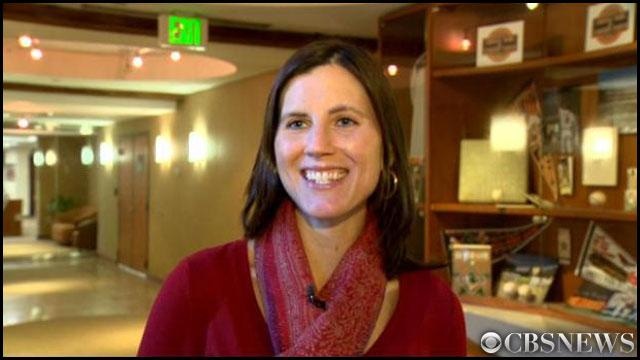
BALTIMORE (WJZ) - After a long battle with lung cancer, the Orioles director of public relations died Friday morning at age 36.
Monica Pence Barlow was diagnosed with stage IV lung cancer in September 2009. "I was blown away by the diagnosis. I was just 32. I had never been a smoker, I had no family history of cancer, and I had always maintained a healthy lifestyle," she wrote in a an article posted on American Association for Cancer Research last year. Barlow has been the O's PR director since April 2008. Majority owner Peter Angelos released the following statement: "It was with deep sadness that I learned of Monica's passing this morning. In her 14 years with the club, she was a beloved member of the Orioles family, starting as an intern and becoming director of public relations. Over the past four and a half years, the work Monica did to raise awareness and funds for cancer research was a testament to her dedication to helping others. The strength and resiliency she displayed by not letting her illness define her was a great inspiration to all who knew her. Her loss will be felt deeply by not only our front office staff, but also our manager, players and coaches, with whom she worked on a daily basis. On behalf of the club, I extend my condolences to her husband, Ben; her parents, Wayne and Ramona Pence; her brother, Jonah; her sister, Natalie; and her family and friends." The team plays its first exhibition game in Port Charlotte, Fla. on Friday. Manager Buck Showalter broke the news to players before their drive. He choked up when asked to say a few words about Barlow at a Friday morning presser, according to an article posted on MASN. "I tried to text her every night before I went to bed," Showalter said. "Today was the first time I didn't get a returned one." He released the following statement: "We lost a feather from the Oriole today. Monica embodied everything we strive to be about. Her passion, loyalty and tenacity set a great example for everyone in the organization. She was so courageous in continuing to do her job the last few years despite her pain. This is an especially tough day for those of us that worked with her on a daily basis. It was a blessing to have her in my life. She made our jobs so much easier. We won't be able to replace Monica. We will only try to carry on. I am going to miss her as a colleague and a friend. She was a rock." Barlow interned with the Orioles in 1999 and spent a year as PR assistant with the Richmond Braves. Lung cancer survivor & Jill's Legacy advisory board member, Taylor Bell, was featured in the August 2013 issue of Cosmopolitan! Congratulations, Taylor!
You can read the Cosmopolitan article HERE. Originally published at espnW.com on Dec 11, 2012 by Sarah Spain  Kelcey Harrison, center, and Jill Costello, right, were lifelong friends, seen here with Gianna Toboni on a grade school field trip. [Photos courtesy of Kelcey Harrison] A couple of Saturdays ago, while you were watching college football or out buying a Christmas tree, 24-year-old Kelcey Harrison was running the last 20 miles of a 3,500-mile "jog" from Times Square to her hometown of San Francisco. Harrison, who graduated from Harvard, where she played soccer, is young, healthy and motivated. By the time she completed The Great Lung Run, she had logged 30 miles nearly every day for four months straight. Harrison ran because she can. And because her lifelong friend Jill Costello -- who was also once young and healthy and motivated -- cannot. On June 6, 2009, Costello, then a junior at Cal and a member of the crew team, was diagnosed with lung cancer. The disease was already at stage 4 and had spread; she was given about a year to live. Costello spent that year finishing school, earning Pac-10 Athlete of the Year honors, acting as vice president of the Panhellenic Council and doing tireless work for lung cancer charities -- all while undergoing chemotherapy. In May 2010, doctors told Costello she could not be cured; all they could do was try to make her last few weeks more comfortable. In those last weeks she walked across the stage at graduation (with a 4.0 GPA) and helped Cal to a second-place finish at the NCAA crew championships. "Jill was really strong," Harrison said. "She was really confident that she was gonna be the one to beat stage 4 lung cancer. She was very convincing in her argument; even at the very end we really believed she was going to be the miracle." Costello died June 24, 2010. Great Lung Run  Kelcey Harrison No. 1 Cancer Killer A young, vibrant nonsmoker, Costello was the last person anyone would expect to get lung cancer. But 20 percent of the more than 20,000 women diagnosed with the disease each year have never smoked. Lung cancer is the No. 1 cancer killer in the United States, taking more lives than colon, breast and prostate cancer combined. Despite the staggering stats, there are no pink ribbons worn or mustaches grown in the name of lung cancer. There is, instead, a stigma that the disease is self-inflicted; an illness brought on by a life of smoking. Research and funding is limited and the five-year survival rate for lung cancer is 15.5 percent; it hasn't budged in 40 years. More than half of all people with lung cancer die within a year of being diagnosed. Costello hung on for 18 extra days. So Harrison runs to raise money and awareness about the disease that took her friend's life. The Great Lung Run has raised more than $150,000 for Jill's Legacy, an advisory board to the Bonnie J. Addario Lung Cancer Foundation, the charity Costello worked closely with in the months before her death. Darby Anderson, the director of Jill's Legacy, said at first she didn't think Harrison would follow through with her plan to run across the country. "I thought she was nuts," said Anderson, who was a sorority sister and close friend of Costello's. "I told her to call me back when she had an actual plan and then we would take her project from there. … [That] April I saw her in D.C. when I was there for our Jog for Jill Georgetown and she had a website, route, places to stay and was ready to actually make this happen. I was blown away." Harrison was up early every morning to jog her 30 miles, taking a day off every 10 days or so to let her body rest. She took a break to walk every once in a while, but never stopped moving until the 30 miles were finished. "It's just like getting up and going to work," Harrison said. "Sure there are days where it wasn't the first thing I wanted to be doing but that was my routine and my job at the time, so just gotta get up and do it." Harrison's not sure how, but after 3,500 miles, she feels OK. "I don't have an answer as to why I'm holding up so well," Harrison said. "It's a mystery to me just like everyone else. … People said they think I have the right motivation and someone special looking over me." Harrison ran solo for the first six weeks of her trip, pushing her belongings in a jogging stroller and staying with hosts who would pick her up at the end of each run and drop her off the next morning where she left off. Eventually one of her friends from Jill's Legacy joined her on the road in a donated car, driving her to and from hotels along the way. (The donated car, by the way, was a gold Chrysler 300 with 22-inch rims. When their first donated car lost its power steering the girls ended up at Oscar's Auto Salvage in New Mexico, hoping to sell it and rent one for the remainder of the trip. Instead, Henry, the shop's owner, offered his own tricked-out car for the final months of the trip.) 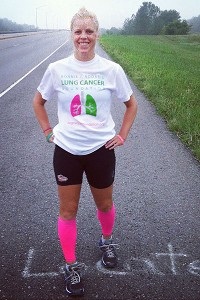 Kelcey Harrison Just another day at the office
Running more than a marathon every day for four months sounds nearly impossible, but Harrison said from the start that if Costello could accomplish as much as she did in her last year of life, all while being ravaged by chemo, then a simple jog across the country was nothing. "I spent a week with her on the road and she'd finish up her run and it was like she had just finished a day at work," Anderson said. "We would hang out, head to dinner, chit-chat and do completely normal things, except that she had just run 30 miles that day. … Kelcey has more courage and inspiration than anyone I have ever met and I am so grateful to have been able to just be a small part of this huge adventure." The last part of The Great Lung Run was across the Golden Gate Bridge to Crissy Field. The Cal crew team, Harrison and Costello's high school crew team and other friends and family joined in for the final miles. The official completion of Harrison's run took place last Thursday -- a celebratory cocktail party at St. Ignatius College Prep, the high school she and Costello attended. Harrison had been honoring Costello's memory with each step of her journey, but returning to a place where they grew up was difficult. "It's not hard to think about Jill all the time because she sort of turns into this image, a legend" Harrison said. "What's hard is when you find those moments to step back and remember Jill your friend. Jill who did Halloween costumes with me for 16 years of our lives. That's where it's tough. "It's become bigger than her, which sometimes is sad because you feel like you're forgetting a little bit of your friend, but in her last year of life that's really what she was aiming for. All of us at Jill's Legacy are really proud of what we're accomplishing but also really sad about [the reason] we're all involved in this." Harrison will wake up this week with no miles to run, no path to follow. She's no longer interested in attending law school, but isn't quite sure what she wants to do instead. "I'll take a little time to relax and then try to figure out what's next," she said. "I'm looking out for jobs, but I'll always be tied to our foundation and the cause of lung cancer. We'll always have jogs, bar events, restaurant things; anything to get more young people involved in lung cancer awareness. That will continue forever." |
|
 RSS Feed
